
The Missing Piece
Questioning the deliberate way of building your own style and how sometimes one thing can dramatically change your way of thinking.

Last autumn, I wrote here in the magazine that one of the things I would like to add to my wardrobe would be a leather jacket. In the end, after several months of searching, I managed to find something on the secondary market that caught my attention. When the jacket finally came into my hands, it turned out that I feel much better in it than I could have imagined - despite the fact that I chose a model completely different from the one I was looking for at the beginning - and that I can easily combine it with almost everything I already have. Moreover, since I have it, I have started to question my previous belief that whenever I go out among people, I always want to wear a proper jacket… Could it be that by accident I have found one of the missing pieces of my style?
You build a wardrobe over years, step by step, following a certain order. Everything goes well, you make progress, you gradually add what was missing to achieve a given result and you create your own small universe. The problem is that when we limit ourselves to a very specific aesthetic, sooner or later we reach a dead end. Reaching the limits within the order we operate in can lead to many feelings, but none of them are positive. Starting from boredom and ending with frustration, it is easy to say goodbye to passion.
I think that nowadays – due to how intensely we are bombarded with stimulants and omnipresent advertising – we have ideas that are too precisely defined about what we would like to wear and how we would like to look. Unfortunately these ideas often do not come from within, even if they feel personal. This, in turn, prevents satisfaction with the current state, and instead of creating individualism and uniqueness, it makes everything more uniform.
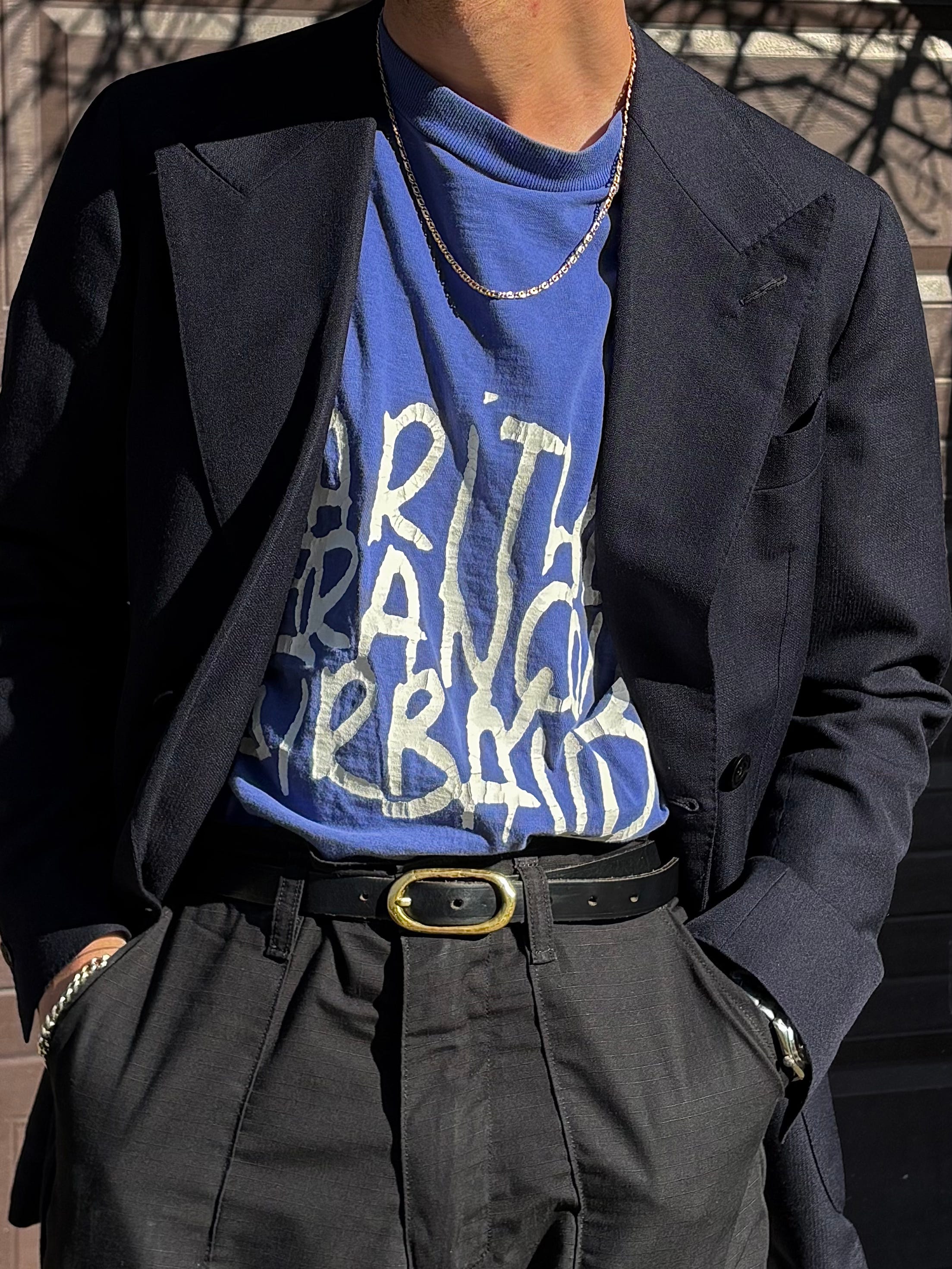
People build their wardrobes in many different ways. I always joke that despite having very specific concepts (and of course I am not immune to external influences), what saves me from the trap of uniformity is the way I buy. I no longer follow a very strict plan, I have ideas of what I would like to have but I’m open to the uncertain. The results of my searches and purchases often surprise even me, and with time I started to see that these unexpected elements are not accidents, but something much more important.
The theory of missing pieces – missing elements are things from outside the order we know well, which, when they come into our hands, not only fit perfectly into the mix we have already created but also change the rules of “our game” for the future. I do not mean only a short-term “honeymoon effect” when we wear something all the time just because it is new, but something deeper. In this way, the wardrobe stops being a closed system and becomes something more dynamic. Instead of only filling gaps, we begin to reshape the entire structure. A single unexpected piece can redefine proportions, colors, or even the attitude behind the way we dress. It is not just an addition – it becomes a catalyst.
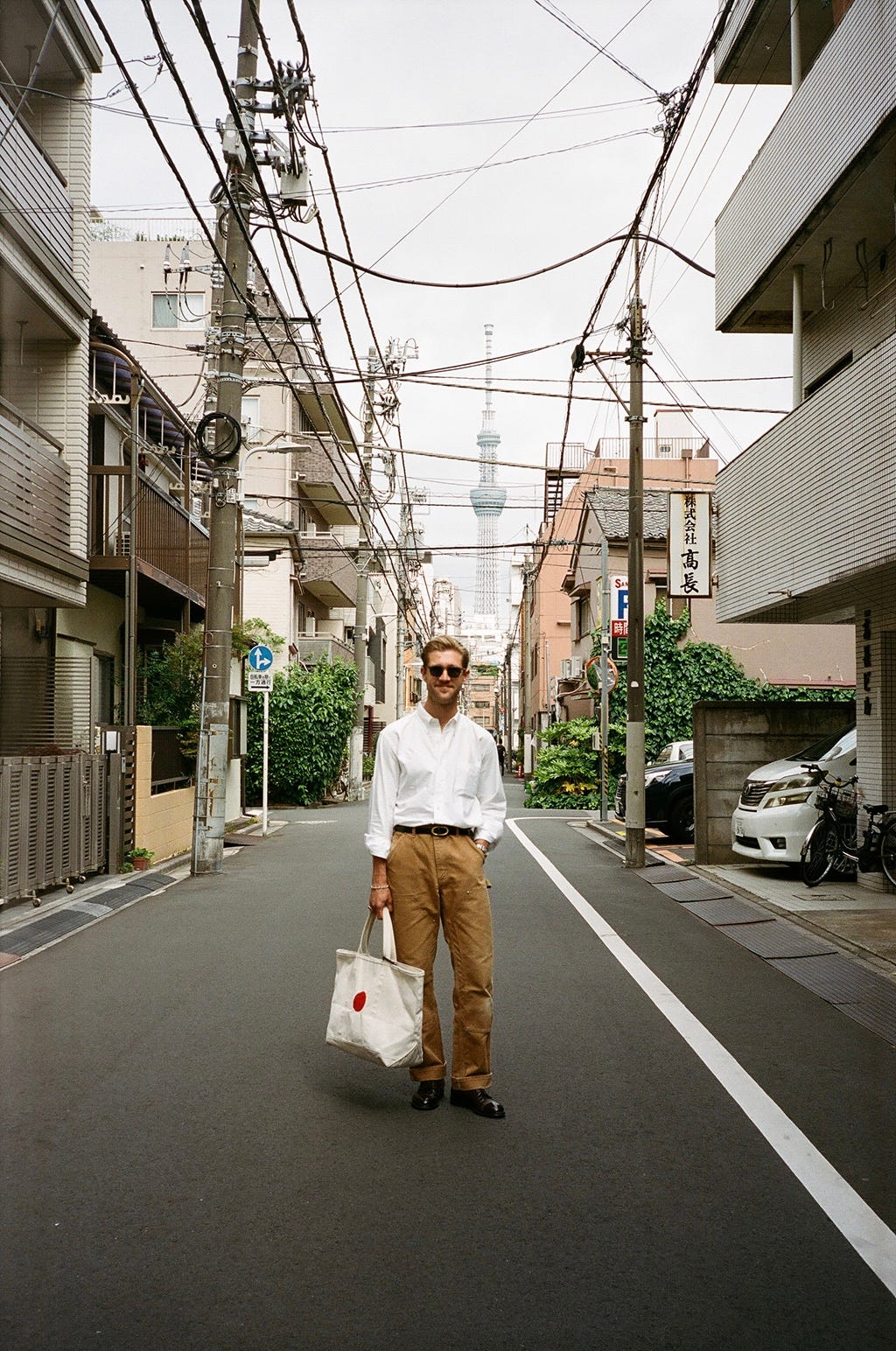
In the era of the Internet, online shopping and fast, relatively cheap international shipping (leaving aside hidden costs, such as environmental ones), at least in theory we have access to everything that catches our eye. Although this gives us endless possibilities, it also takes something away. The element of chance becomes weaker. Many people, especially in the “classic men’s elegance” bubble, plan their purchases with extreme precision. They create detailed lists of what is needed to achieve a specific outcome. I also had such a list at one point.
Despite this, I reached a stage where I felt that no matter how well I had planned my wardrobe, something was still missing. The system was complete, but not alive. Everything worked, but nothing surprised me. The drawer I had chosen was simply too small, not because it lacked space, but because it did not allow for transformation.
Building a personal style can be compared to assembling a puzzle without knowing exactly what image it is supposed to create. We have a general idea, a conceptual outline, but it remains blurred and without details. What is more, it constantly changes, often under the influence of trends and external expectations. This instability makes rigid planning even less effective.
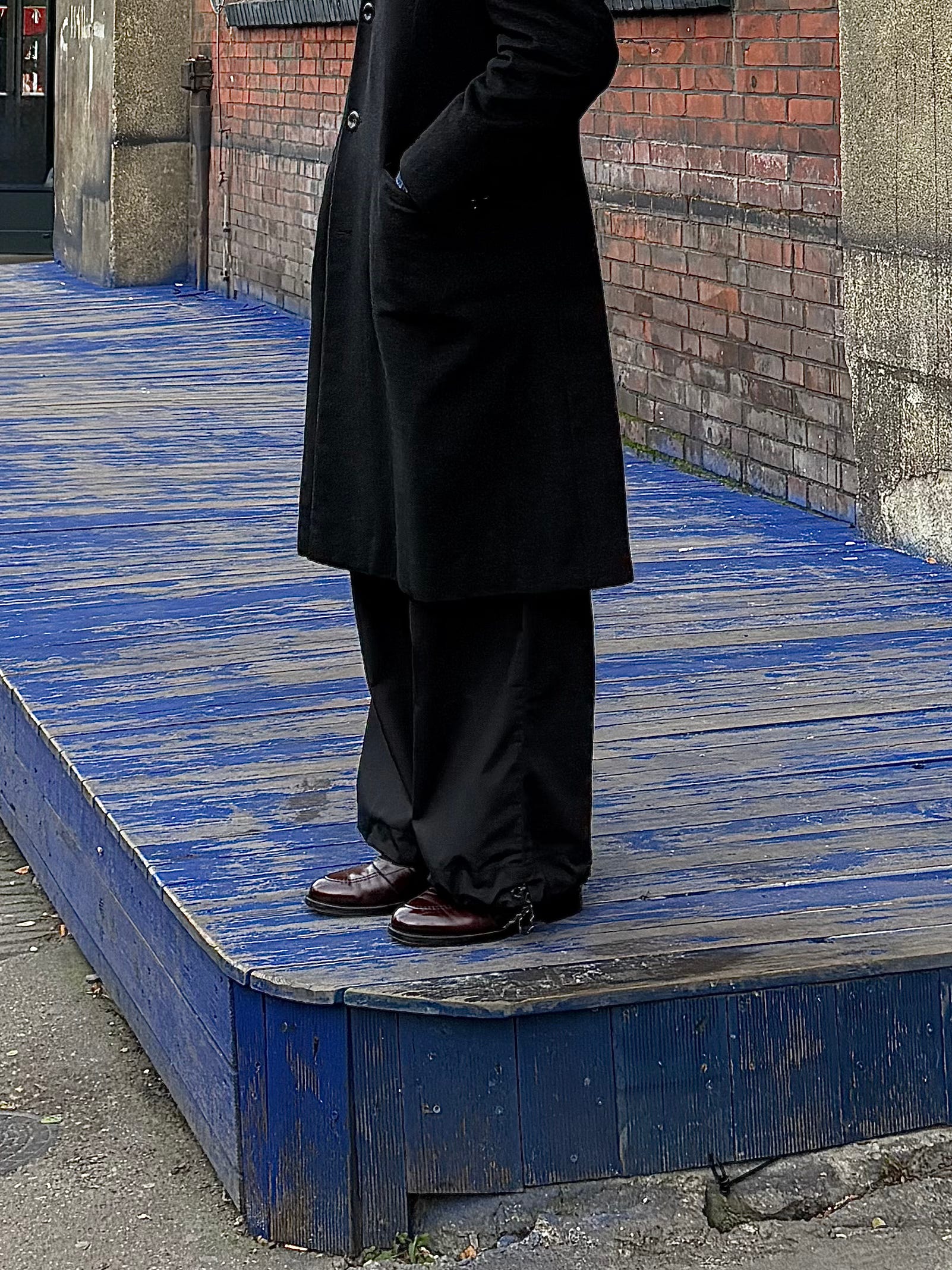
Can this problem be avoided by focusing on basics? I do not think so. Basics create a foundation, but they rarely define identity. Conversations with people around me seem to confirm this. What truly distinguishes a style is built on exceptional pieces – the ones that do not fully belong at first glance. Building style on basics is like cooking without spices.
To give the whole composition character, we need those missing elements. They connect parts that previously did not seem to belong together and add expression to the entire system. More importantly, they challenge the initial assumptions and push the wardrobe beyond its original limits.
This also raises a broader question: to what extent is truly individual style a result of intention, and to what extent is it shaped by coincidence? In the past, this balance may have been different. Before the Internet, access to both information and particular objects was much more limited. People worked more with what they happened to find. Perhaps this is why many style icons come from those times.


I like to think that true style is not only built, but it is also discovered. And that without a certain openness to the unexpected – without allowing these missing pieces to appear – it is difficult to move beyond repetition and create something that feels genuinely personal.
I think that if we limit ourselves to second hand, we are much more open to whatever the fortune brings us.
Congrats on the jacket. That's a gem.